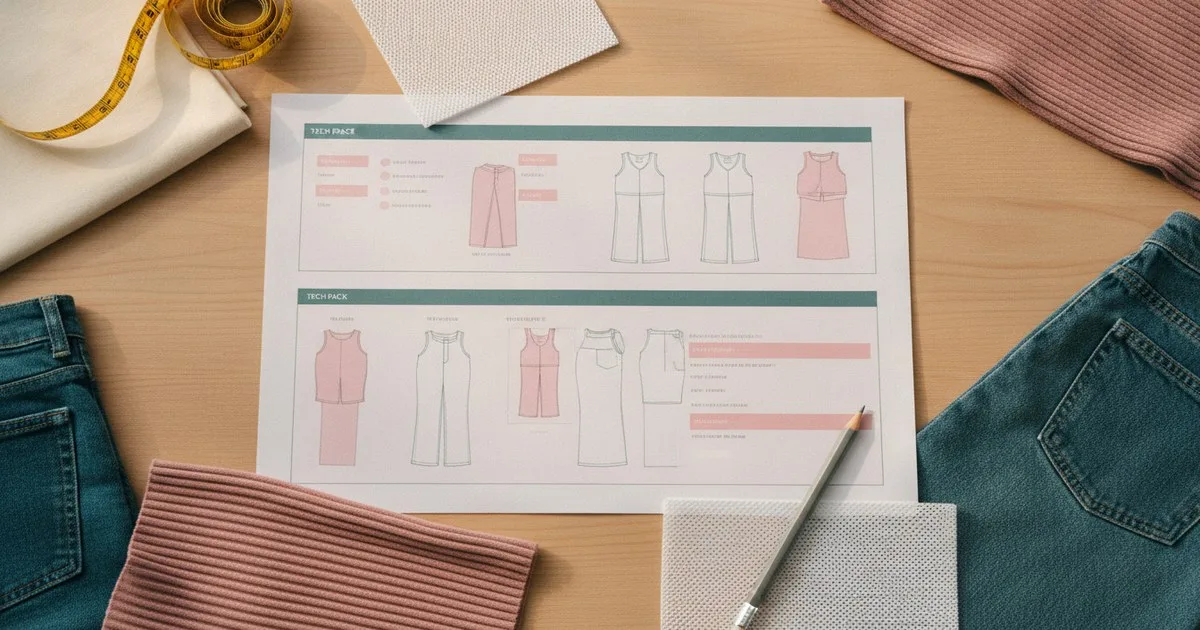
Techpacker is a web-based platform purpose-built for creating, managing and sharing fashion tech packs. Where full PLM suites ask you to adopt an entire ecosystem, Techpacker focuses on the document at the centre of every production handover: the tech pack itself, along with the BOM, costing sheet and measurement table that travel with it.
Key takeaways
- Techpacker positions itself as a dedicated tech pack tool rather than a full PLM, which keeps the learning curve short for small-to-mid-size brands.
- Its core workflow covers spec creation, bill of materials, costing, and factory-facing comment threads inside a single shareable document.
- The platform targets brands and designers who currently build tech packs in spreadsheets or presentation software and want a structured alternative.
- Production managers evaluating it should weigh what they gain in structured handover against what a full PLM provides in upstream product development.
- Publicly available information does not confirm enterprise customer counts, ARR or funding rounds, so those figures are not reported here.
What did Techpacker become known for?
Techpacker entered the market at a moment when the dominant tech pack workflow was still a combination of Adobe Illustrator flat sketches, Excel BOMs and emailed PDF attachments. The platform's pitch was direct: give independent brands and small production teams a structured, browser-based environment where the spec, the materials list and the factory conversation live in the same place.
That positioning resonated with a segment that had long been underserved. Full PLM platforms — built for enterprises with dedicated IT teams and multi-year implementation budgets — were out of reach for most emerging brands. Techpacker offered a lighter entry point: a tool shaped around the tech pack document itself, not around a broader product lifecycle process.
As Techpacker's own published guidance explains, a tech pack is the primary communication document between a brand and its factory — covering construction details, materials, measurements, colourways and quality standards. Building a tool around that document, rather than around a PLM module hierarchy, was a deliberate product decision that defined the company's early identity.
What does Techpacker ship today?
The current product is a cloud-based tech pack editor organised around a familiar document metaphor. A user builds a spec by adding sections — technical drawings, measurement tables, construction notes — and the platform structures those inputs into a shareable, factory-ready document.
The bill of materials sits inside the same environment. Techpacker's BOM guide describes how the platform lets you attach a materials sheet alongside a costing sheet and measurement table within a single tech pack, rather than managing those as separate files. For a production manager, that means the factory receives one document that contains the full material specification, not a bundle of attachments that can fall out of sync.
Factory collaboration is handled through comment threads attached directly to sections of the tech pack. Revision history is tracked inside the platform, so you can see what changed between sample rounds without comparing PDF versions manually.
The platform also offers a template library. Teams can build from a base template for a garment category — wovens, knits, footwear — and adapt it rather than starting from a blank page each season. That matters in production: consistency in how a tech pack is structured reduces the back-and-forth that comes from factories receiving documents in different formats from different designers.
On the customer side, Techpacker is used across a range of brand sizes, from independent labels to larger organisations. adidas is among the brands publicly associated with the platform, which signals that the tool is not limited to early-stage companies, even though its positioning skews toward teams that want simplicity over enterprise depth.
For teams that need an additional agent layer connecting their product data across systems, Athena Studio is worth exploring alongside any dedicated spec tool — it sits above the data rather than replacing the document workflow.
How does Techpacker compare to a full PLM?
This is the question production managers ask most often, and the honest answer is that the two categories solve different problems.
A PLM platform manages the entire product lifecycle: concept, range planning, material sourcing, sampling, approvals, costing, production and beyond. It connects teams across functions and often integrates with ERP systems. That breadth comes with implementation complexity, onboarding time and licensing costs that reflect an enterprise product.
Techpacker is narrower by design. It does not manage range planning, supplier databases or purchase orders. What it does — structured tech pack creation, BOM, costing and factory communication — it does in a tool that a designer or production coordinator can be productive in quickly.
The practical implication: if your team's pain is that tech packs are inconsistent, live in scattered files and generate too many clarification emails with factories, Techpacker addresses that directly. If your pain is that you have no visibility into where a style sits across the full development calendar, or that costing data is disconnected from sourcing decisions, you are describing a PLM problem.
Some teams run both: a dedicated spec tool for the document workflow and a PLM for broader lifecycle management. Whether that duplication is worth it depends on team size, how many styles you run per season and how tightly your tech pack data needs to connect to upstream planning.
Where is Techpacker heading?
Publicly, Techpacker has signalled interest in making the tech pack creation process faster through structured templates and guided workflows. The direction implied by its product positioning is toward making spec creation more systematic — reducing the blank-page problem and the inconsistency that comes from each designer building documents differently.
Beyond that, the company's public communications do not detail a specific product roadmap, so it would be speculative to characterise the next phase with precision.
What is genuinely unclear from public sources?
Several things that production managers reasonably want to know are not verifiable from public information:
- Funding and ownership. No funding round or investor information for Techpacker is available in current public sources. The company's structure and backing are not confirmed here.
- Customer counts and retention. The platform does not publish verified customer numbers, churn rates or satisfaction scores.
- Integration depth. How deeply Techpacker connects to ERP systems, fabric libraries or PLM platforms in practice — beyond what its marketing describes — is not independently verifiable.
- Enterprise support. What dedicated support, SLA or onboarding looks like at larger account sizes is not detailed in public documentation.
If any of these matter to your evaluation, the right move is to ask Techpacker directly during a trial or demo, and to speak with a current user at a similar brand size.
FAQ
What is Techpacker used for? Techpacker is used to create, manage and share fashion tech packs — including technical drawings, measurement tables, bills of materials and costing sheets — and to communicate with factories through comments attached to the spec document.
Is Techpacker a PLM system? No. Techpacker focuses on the tech pack document and factory handover workflow. It does not cover range planning, supplier management or purchase orders, which are core PLM functions.
What types of teams use Techpacker? The platform is used by independent brands, production coordinators and technical designers who want a structured alternative to building tech packs in spreadsheets or presentation software. Larger brands also use it for specific teams or product categories.
Can Techpacker replace spreadsheets for BOM and costing? For many teams, yes. The platform structures materials and costing data inside the tech pack itself, reducing the risk of files falling out of sync. Whether it replaces your spreadsheet workflow depends on how complex your costing model is.
How does Techpacker handle factory communication? Revision comments and feedback threads are attached directly to sections of the tech pack inside the platform, so communication is tied to the spec rather than managed in separate email threads.