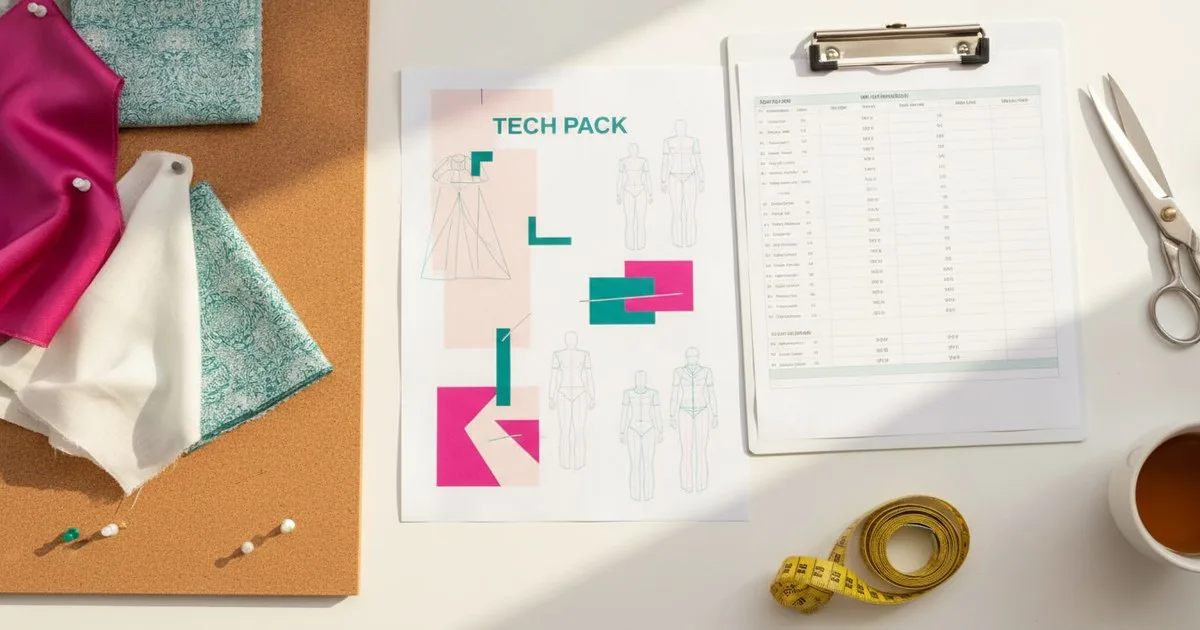
Sampling is expensive. Every round of corrections you could have caught before the sample was cut adds cost, delays your calendar, and erodes trust with your factory. The fix is not faster sampling — it is a rigorous handover from design to production that leaves nothing ambiguous before the sample order is placed.
Key takeaways
- An incomplete tech pack is the single most common reason a first sample misses the mark.
- Bill of materials errors discovered during sampling typically cascade into recosting, re-sourcing, and calendar slippage.
- Confirming factory capacity before sampling — not after — protects your bulk production slot.
- A signed-off handover document gives design and production a shared record of what was agreed, reducing blame cycles when something goes wrong.
- Platforms that connect PLM data to supplier collaboration can catch mismatches between the tech pack and the BOM before the sample order is sent.
Why do so many samples come back wrong?
The short answer: the information sent to the factory was incomplete, contradictory, or not yet finalised when the sample order went out. Design teams are often still refining a silhouette or a colourway while production is already chasing lead times. The result is a sample built on a moving target.
A tech pack is the primary document a factory uses to build your garment. When it is missing measurements, has placeholder colourways, or lacks construction notes, the factory fills in the gaps with its own judgement — which is rarely what you had in mind. According to guidance published by manufacturing consultants, a well-structured tech pack reduces miscommunication and minimises costly production errors, because it gives the factory a single source of truth rather than a patchwork of emails and mood boards.
The solution is a formal handover gate: a defined moment at which design hands a complete, approved package to production, and production confirms it is ready to place the sample order. What follows is the checklist for that gate.
What does a complete tech pack look like?
Before anything else, the tech pack must be approved — not 'almost done', not 'pending one measurement'. Approved means a named person in design has signed off and no open comments remain.
A production-ready tech pack contains:
- Front and back flat sketches with callouts for every seam, topstitch, and hardware placement
- Measurement chart with all points of measure for the base size and grading instructions for every size in the run
- Construction notes covering stitch type, stitch density, seam allowances, and finishing methods (serged, bound, felled)
- Colourway table with confirmed colour names, codes (Pantone or equivalent), and placement per colourway
- Trim and hardware details — zipper length and brand spec, button diameter and attachment method, label type and placement
- Care label and composition — fibre content percentages and washing instructions, which must match the actual fabric before the tech pack is finalised
- Fit notes from any previous proto rounds, if this is a carry-over or revised style
If any of these fields contain a placeholder or a question mark, the tech pack is not ready. Send it back.
How do you finalise the BOM before sampling?
The bill of materials (BOM) is the itemised list of every component that goes into the garment: shell fabric, lining, interlining, thread, zippers, buttons, labels, hang tags, poly bags, and packaging. It needs to be complete and costed before sampling, for two reasons.
First, the factory builds the sample from what you specify. If the BOM lists a generic woven interlining but you actually want a specific fusible weight, the sample will use whatever the factory has on hand. Second, your pre-sampling cost estimate is only reliable if the BOM reflects the actual components. Swapping a trim after sampling — because you did not confirm availability — can shift your cost of goods enough to break your margin.
For each BOM line, confirm:
- Supplier and article number — not just a description, an actual reference the factory can order
- Colour and finish — confirmed against the tech pack colourway table
- Minimum order quantity — checked against your planned production volume so you are not locked into excess
- Lead time — confirmed with the supplier so you know whether the material will arrive before bulk cut
- Unit cost — agreed in writing, not estimated from memory
- Approved sample or swatch — physically signed off, not just described
If you are managing multiple styles or seasons, a PLM platform helps keep BOM data connected to the tech pack so that a change in one updates the other. Backbone PLM, now part of Bamboo Rose, provides product lifecycle management tooling designed for exactly this kind of cross-team data consistency — linking tech pack approvals, BOM records, and supplier collaboration in one place.
Are your materials actually sourced and available?
A BOM is not the same as sourced materials. Sourced means you have confirmed with the supplier that the fabric or trim is available in the quantity you need, at the price you have costed, within the lead time your calendar requires.
Common sourcing gaps that surface during sampling:
- The fabric is available but not in the colourway you specified. Dyeing to order adds lead time and often a minimum. If you have not confirmed this before sampling, you may receive a sample in a substitute colour that does not represent your final product.
- The trim is discontinued. Factories sometimes substitute without flagging it. If you have not confirmed availability yourself, you may not find out until the sample arrives.
- The fabric has not been tested. Shrinkage, colourfastness, and pilling tests take time. If you are waiting for test results, the tech pack composition line is not yet final — and neither is the care label.
For each material on the BOM, you need written confirmation from the supplier: available, in spec, at the agreed price, within your lead time. Attach that confirmation to the handover package.
Have you confirmed factory capacity?
This step is skipped more often than any other, and it is the one that causes the most calendar damage. Confirming capacity means your factory has acknowledged — in writing — that it has a production slot for your bulk order in the window you need, conditional on sampling completing on schedule.
Why does this matter before sampling? Because sampling and bulk production are often handled by different lines or even different facilities. A factory that can turn your sample in three weeks may not have bulk capacity for another four months. If you discover that after sampling, you have lost the window.
Before placing the sample order, get written confirmation of:
- Sampling lead time — when the sample will be cut and shipped
- Bulk production window — the dates the factory is holding for your order, and any conditions attached
- Minimum order quantity for bulk — confirmed against your planned volume
- Any capacity constraints — peak periods, other clients, machinery availability for your fabric type
Larger brands — Zalando, for instance, works with thousands of brand partners across dozens of markets — manage this through structured supplier portals that log capacity commitments alongside product data. Smaller teams can achieve the same rigour with a simple written confirmation email and a shared calendar entry, as long as it is done before the sample order goes out.
What does the handover document itself look like?
The handover document is not a new piece of work — it is a cover sheet that confirms every item on the checklist has been completed and by whom. It exists so that design and production have a shared record of what was agreed at the handover gate.
A minimal handover document includes:
- Style name and number
- Season and delivery window
- Tech pack version number and the name of the person who approved it
- BOM version number and confirmation that all lines are sourced and costed
- List of approved material swatches attached
- Factory name and the contact who confirmed capacity
- Sampling lead time and expected sample arrival date
- Any open items — things that are known but not yet resolved, with an owner and a deadline
That last section is important. A handover document does not have to be perfect to be useful. If there is one colourway still pending a dye confirmation, write it down, assign it, and give it a deadline. What you are trying to avoid is the situation where an open item exists but nobody knows it is open.
Tools like The F* Word are designed to accelerate the documentation side of this process — creating editable tech pack drafts and connecting creative direction to supplier handoff — which can reduce the time between design sign-off and a production-ready package.
What can still go wrong after a clean handover?
Even with a complete handover, sampling produces surprises. The checklist does not eliminate iteration — it eliminates the avoidable kind.
What a clean handover will not protect you from:
- Fit issues that only become visible on a physical sample. This is normal and expected; it is what sampling is for.
- Fabric handle differences between the lab dip and the bulk roll. Always request a bulk swatch before approving the sample.
- Factory interpretation of construction notes. Even detailed notes leave room for ambiguity. Use annotated photos of reference garments where possible.
- Shipping or customs delays on materials sent to the factory for sampling.
What a clean handover will protect you from: discovering mid-sampling that the zipper you specified is discontinued, that the factory does not have capacity for your bulk window, that design and production were working from different versions of the measurement chart, or that nobody had confirmed the fabric composition for the care label.
Those are the changes that cost real money and real time. The checklist exists to make them impossible.
FAQ
What is a design-to-production handover in fashion? It is the formal transfer of a complete, approved product package — tech pack, BOM, sourced materials, and factory confirmation — from the design team to production, marking the point at which a sample order can be placed without risking avoidable mid-sampling changes.
How do I know if my tech pack is ready for sampling? Every field must be filled with confirmed information: all measurements, construction notes, colourway codes, trim specs, and care label composition. If any field contains a placeholder or an open question, the tech pack is not ready. A named approver must have signed off before it goes to the factory.
What is a BOM in fashion production? A bill of materials (BOM) is an itemised list of every component in a garment — fabrics, linings, interlinings, threads, zippers, buttons, labels, and packaging — with supplier references, colours, quantities, unit costs, and lead times. It is the costing and sourcing backbone of the tech pack.
Why should I confirm factory capacity before sampling, not after? Sampling and bulk production often run on separate schedules. A factory that can sample quickly may not have a bulk slot available when you need it. Confirming capacity before sampling protects your production window and prevents the calendar damage of discovering the gap after the sample is approved.
What tools help manage the design-to-production handover? PLM platforms that link tech pack data, BOM records, and supplier communication in one place reduce version-control errors and keep approvals traceable. For teams that need to move quickly from creative direction to a production-ready document, workflow tools that generate structured tech pack drafts can compress the time between design sign-off and factory handover.
What should I do if the handover is not fully complete but the calendar is tight? Document every open item explicitly: what it is, who owns it, and when it will be resolved. Do not send the sample order until the items that will affect the sample — measurement chart, construction method, key materials — are confirmed. Items that affect only bulk (such as a secondary colourway) can remain open with a clear deadline, as long as they are written down and assigned.